

C. Roelens
Member
I posted this helmet on other forums... thought you might like to see it.
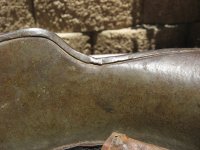
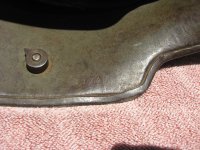
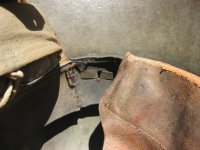
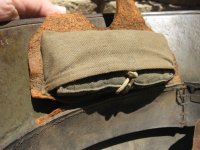
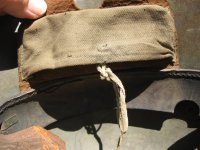
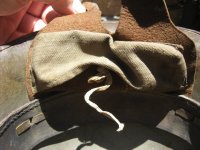
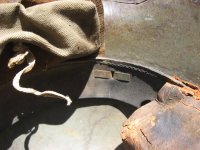
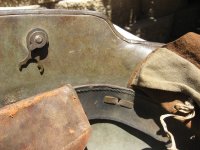
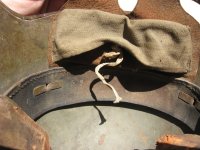
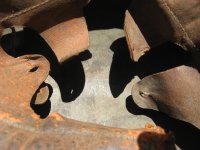
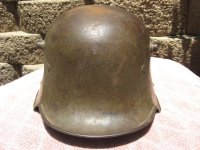
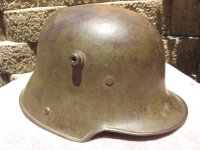
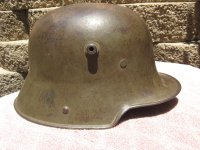
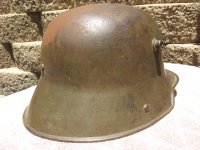
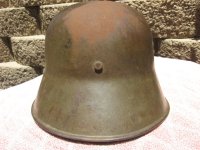
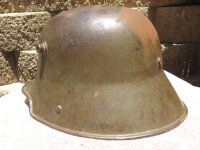
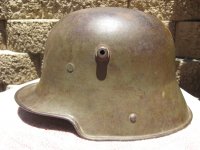
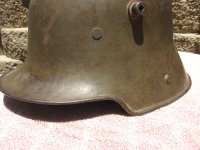
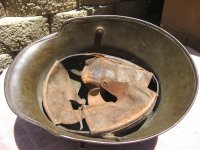
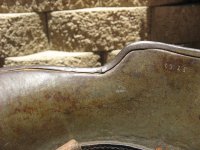
An extremely rare, and important, first production of the WWI German steel combat helmet. The maker and size are stamped E.T. 64, and the batch number is 208. The shell is in great shape retaining most of its original field grey paint inside and out, however, there is a patch of light surface rust on the top/rear area. All three liner pins are original to this helmet. The early production M16 liner system is original to this helmet and is in great shape. Size 64 is stamped into the thick leather liner band. None of the six liner pad fingers have been pulled-thru. One of the original cushions remains tied in its pouch.
This helmet was a souvenir bring-back from WWI U.S. Army Veteran Dean Laird Fryer. Fryer held the rank of Wagoner, serving with the 305th Field Hospital and Ambulance Company, 77th Division. A.E.F. It was a recent Northern Virginia find by Mike Manifor from the family of a Pennsylvania estate. The lot consisted of this M16 SD helmet, Fryer's 77th Division helmet, marked gas mask, letter(s) and a WWI German hate belt. Everything was auctioned off on eBay separately.
Notes from Hans K:
First of all, congratulations on finding this gem Chuck. It's exactly what you want in a square dip - original factory paint and original early pre-production model liner system. I love it.
Regarding the smelting lot numbers, it's important to remember that the very first SD helmets were manufactured late in 1915 - around 700 or so as far as I recall. After the conclusion of field testing in December 1915 a further 30 000 helmets were ordered in January 1916. I believe it's likely that the first (1915) batches had no smelting lot numbers while the 1916 manufactured series introduced these number/letter codes for quality control purposes during large scale manufacturing.
To try and answer your second question regarding liner variants, it's probable that the single pad and 2 finger pad systems were two of the three variant test pieces introduced at the same time during the December1915 field trials, and that the 2-finger version quickly won out. (Every soldier involved in these trials was given a questionnaire to fill out for quick feedback). I believe that the very first liner pads used were probably the 3-finger variant seen in Professor Schwerdt's original patent drawings. These liner pads are very very rare.
An extremely rare, and important, first production of the WWI German steel combat helmet. The maker and size are stamped E.T. 64, and the batch number is 208. The shell is in great shape retaining most of its original field grey paint inside and out, however, there is a patch of light surface rust on the top/rear area. All three liner pins are original to this helmet. The early production M16 liner system is original to this helmet and is in great shape. Size 64 is stamped into the thick leather liner band. None of the six liner pad fingers have been pulled-thru. One of the original cushions remains tied in its pouch.
This helmet was a souvenir bring-back from WWI U.S. Army Veteran Dean Laird Fryer. Fryer held the rank of Wagoner, serving with the 305th Field Hospital and Ambulance Company, 77th Division. A.E.F. It was a recent Northern Virginia find by Mike Manifor from the family of a Pennsylvania estate. The lot consisted of this M16 SD helmet, Fryer's 77th Division helmet, marked gas mask, letter(s) and a WWI German hate belt. Everything was auctioned off on eBay separately.
Notes from Hans K:
First of all, congratulations on finding this gem Chuck. It's exactly what you want in a square dip - original factory paint and original early pre-production model liner system. I love it.
Regarding the smelting lot numbers, it's important to remember that the very first SD helmets were manufactured late in 1915 - around 700 or so as far as I recall. After the conclusion of field testing in December 1915 a further 30 000 helmets were ordered in January 1916. I believe it's likely that the first (1915) batches had no smelting lot numbers while the 1916 manufactured series introduced these number/letter codes for quality control purposes during large scale manufacturing.
To try and answer your second question regarding liner variants, it's probable that the single pad and 2 finger pad systems were two of the three variant test pieces introduced at the same time during the December1915 field trials, and that the 2-finger version quickly won out. (Every soldier involved in these trials was given a questionnaire to fill out for quick feedback). I believe that the very first liner pads used were probably the 3-finger variant seen in Professor Schwerdt's original patent drawings. These liner pads are very very rare.
Attachments
-
 IMG_2148.JPG381.7 KB · Views: 18
 -
 IMG_2149.JPG317 KB · Views: 19
 -
 IMG_2150.JPG390.3 KB · Views: 18
 -
 IMG_2151.JPG339.1 KB · Views: 18
 -
 IMG_2152.JPG351.7 KB · Views: 16
 -
 IMG_2153.JPG368.6 KB · Views: 17
 -
 IMG_2154.JPG349.9 KB · Views: 17
 -
 IMG_2155.JPG393.5 KB · Views: 21
 -
 IMG_2156.JPG437.5 KB · Views: 20
 -
 IMG_2157.JPG407.4 KB · Views: 21