

JustinG
Well-known member
Greetings,
Well, this is an area that I love to collect and one of my passions in the collecting community.
As a background for information: Imperial tallies did not use umlauts, they used the "e" in place of those umlauts so say Möwe would be Moewe. Block lettering was standard for these units. For larger ships the German Navy would not state the type/class of ship if it was a named ship like Kreuzer Emden, it would be S.M.S Emden. Now, there are named individual units like S.M. Torpedoboot Taku.
During Post WW1, during the Reichsmarine period, The navy used only gold colored thread (Metalic Metallfaden, Baumwool Cotton and eventually Cellon) and eventually transitioned into the gothic fraktur script of the Third Reich.
There is a lot of misinformation out there. Some of the most experienced collectors out there believe from photographic evidence that indeed the color scheme of the imperial Mützenbänder are as follows:
First the different types of Kaiserliche Marine.
Gold for "Seemännisches Personal" (all deck-related personnel).
Silver for "Schiffstechnisches Personal" (all technical personnel. also administrative staff wore silver)
Red for "Schiffsjungen" (I would like to translate this with "cadets" - maybe another member has a better translation)
This is from Markus Bodeux and Dani Falk, two very respected knowledgeable collectors.
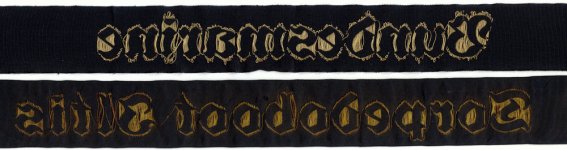
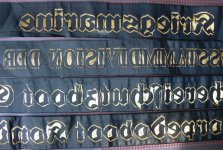
Let me post some examples of tallies of the different German Navy's. I will try to explain the basic characteristics. To keep it simple for now I will take the most common ones: ships.
Shore based units of the Kaiserliche Marine (Imperial German Navy) and latin script type Reichsmarine are sometime very difficult to distinct and it is then down to the knowledge when this particular unit was active. Same applies to the ships/boats of the named tallies of Kriegsmarine and early (Gothic script type) Bundesmarine - knowing what ship was at what time is the key factor here.
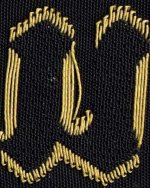
Cotton thread was introduced in early 1917. Yellow cotton was the substitute for Gold, white cotton for silver. Note: in the case of Emden the yellow cotton tally belonged to the 2nd Emden (1916-1919).
The ships of the KaiserlicheMarine had the prefix "S.M.S.", meaning "Seiner Majestäts Schiff", similar to the H.M.S. on British ships. The S.M.S. tallies were worn from 1890 - 1918. Prior 1890 without S.M.S. but just the ship's name.
With a very few excemptions, there was no ship's type mentioned on Imperial tallies but just "S.M.S. [ship's name]".
There are no well made copies with metall thread known so far, so it is pretty safe to buy such tallies. The reverse side looks exactly as the latin Reichsmarine tally from reverse
In accordance to the regulations of summer 1938 all cap tallies ordered by the Kriegsmarine ( Marinebekleidungsamt Kiel or Wilhelmshaven) should have a length of 116-120cm and the letters should be woven from artificial yellow silk (cotton although is not the correct word, artificial silk is correct.) So, if tallies for Prinz Eugen were ordered in that time, they should not be longer and not woven from metal wire.
To be clear, cotton is artifical silk and cellon was a private purchase material and has been wrongly called artifical silk.
The decision to use the artificial silk (cotton) had two reasons:
1) to save copper, silver and gold
2) to make the production faster.
To produce a tally with metal thread letters on a Jacquard-weaving-machine took much more time, because the metal thread was very fragile and often torn off.
Cap tallies for new units did not fall from the sky, they were born with an order from the Reichsmarineamt/Oberkommando der Kriegsmarine with an order, the so called "Aufstellungsbefehl für den Schiffsstamm Kreuzer ..." or "Befehl zur Bildung eines Schiffsstammes für den Zerstörer .....".
This order included until September 1939 the sentence "Die Besatzung trägt ein Mützenband mit der Aufschrift "Kreuzer ............".
These orders to bild a permanent staff for a coming unit was published either in the Marineverordnungsblatt or Stationstagesbefehl Nordsee/Ostsee.
The RMA/OKM gave after publishing ot these orders instructions to the other involved institutions, Marinepersonalamt, Marinebekleidungsamt, Marineunterkunftsamt ............. to prepare the resources for the complete unit. That was the moment the Marinebekleidungsamt ordered the first lot of tallies for the unit.
When the tallies received from the producer in Wilhelmshaven or Kiel they were checked and packed in small paper envelopes to 10 tallies each and sealed with a paper seal and taken into the inventory of the Marinebekleidungsamt. Then it was necessary for the new formed staff to order a concret number of tallies from the Marinebekleidungsamt.
I have copies of all Marineverordnungsblatt 1871-1945, all Stationstagesbefehle and also the survived archivals from Reichsmarineamt/OKM concerning insigna and tallies. Spend several weeks in the Bundesarchiv/Militärarchiv in Freiburg to get them.
My knowledge is:
the last tallies ordered for a ship were Zerstörer Anton Schmitt, exceptionally worn on the day of commission into service on September 22nd 1939, and the last ordered for a land-based unit for the 7.Marineartillerieabteilung, permanent staff formed in August 1939.
I hope this elementary knowledge is not to boring, i think it is necessary. I will pick out some interesting orders from the sources mentioned above this weekend and post scans.
Regards
Markus Bodeux
ChatGPT5 stated this: But couldn't produce the evidence. This doesn't make sense to me. I believe this information is not correct.
June 27, 1890 Riel Castle order:
Uniform regulations explicitly established that metallic thread color denoted service affiliation and status, as follows:
silver thread was worn by Reserves once embarked, and gold was for active fleet service.
I have been attempting to reach out to the Bundesarchiv for documents regarding the M.O.Bl 1893 Nr. 67 which was the order that omission of umlauts not be used.
the Marineverordnungsblatt (M.V.Bl. 1900 Nr. 147) is the section that states the font, style, thread color. I hope to have physical proof of these documents shortly.
Best Regards,
JustinG
Well, this is an area that I love to collect and one of my passions in the collecting community.
As a background for information: Imperial tallies did not use umlauts, they used the "e" in place of those umlauts so say Möwe would be Moewe. Block lettering was standard for these units. For larger ships the German Navy would not state the type/class of ship if it was a named ship like Kreuzer Emden, it would be S.M.S Emden. Now, there are named individual units like S.M. Torpedoboot Taku.
During Post WW1, during the Reichsmarine period, The navy used only gold colored thread (Metalic Metallfaden, Baumwool Cotton and eventually Cellon) and eventually transitioned into the gothic fraktur script of the Third Reich.
There is a lot of misinformation out there. Some of the most experienced collectors out there believe from photographic evidence that indeed the color scheme of the imperial Mützenbänder are as follows:
First the different types of Kaiserliche Marine.
Gold for "Seemännisches Personal" (all deck-related personnel).
Silver for "Schiffstechnisches Personal" (all technical personnel. also administrative staff wore silver)
Red for "Schiffsjungen" (I would like to translate this with "cadets" - maybe another member has a better translation)
This is from Markus Bodeux and Dani Falk, two very respected knowledgeable collectors.
Let me post some examples of tallies of the different German Navy's. I will try to explain the basic characteristics. To keep it simple for now I will take the most common ones: ships.
Shore based units of the Kaiserliche Marine (Imperial German Navy) and latin script type Reichsmarine are sometime very difficult to distinct and it is then down to the knowledge when this particular unit was active. Same applies to the ships/boats of the named tallies of Kriegsmarine and early (Gothic script type) Bundesmarine - knowing what ship was at what time is the key factor here.
Cotton thread was introduced in early 1917. Yellow cotton was the substitute for Gold, white cotton for silver. Note: in the case of Emden the yellow cotton tally belonged to the 2nd Emden (1916-1919).
The ships of the KaiserlicheMarine had the prefix "S.M.S.", meaning "Seiner Majestäts Schiff", similar to the H.M.S. on British ships. The S.M.S. tallies were worn from 1890 - 1918. Prior 1890 without S.M.S. but just the ship's name.
With a very few excemptions, there was no ship's type mentioned on Imperial tallies but just "S.M.S. [ship's name]".
There are no well made copies with metall thread known so far, so it is pretty safe to buy such tallies. The reverse side looks exactly as the latin Reichsmarine tally from reverse
In accordance to the regulations of summer 1938 all cap tallies ordered by the Kriegsmarine ( Marinebekleidungsamt Kiel or Wilhelmshaven) should have a length of 116-120cm and the letters should be woven from artificial yellow silk (cotton although is not the correct word, artificial silk is correct.) So, if tallies for Prinz Eugen were ordered in that time, they should not be longer and not woven from metal wire.
To be clear, cotton is artifical silk and cellon was a private purchase material and has been wrongly called artifical silk.
The decision to use the artificial silk (cotton) had two reasons:
1) to save copper, silver and gold
2) to make the production faster.
To produce a tally with metal thread letters on a Jacquard-weaving-machine took much more time, because the metal thread was very fragile and often torn off.
Cap tallies for new units did not fall from the sky, they were born with an order from the Reichsmarineamt/Oberkommando der Kriegsmarine with an order, the so called "Aufstellungsbefehl für den Schiffsstamm Kreuzer ..." or "Befehl zur Bildung eines Schiffsstammes für den Zerstörer .....".
This order included until September 1939 the sentence "Die Besatzung trägt ein Mützenband mit der Aufschrift "Kreuzer ............".
These orders to bild a permanent staff for a coming unit was published either in the Marineverordnungsblatt or Stationstagesbefehl Nordsee/Ostsee.
The RMA/OKM gave after publishing ot these orders instructions to the other involved institutions, Marinepersonalamt, Marinebekleidungsamt, Marineunterkunftsamt ............. to prepare the resources for the complete unit. That was the moment the Marinebekleidungsamt ordered the first lot of tallies for the unit.
When the tallies received from the producer in Wilhelmshaven or Kiel they were checked and packed in small paper envelopes to 10 tallies each and sealed with a paper seal and taken into the inventory of the Marinebekleidungsamt. Then it was necessary for the new formed staff to order a concret number of tallies from the Marinebekleidungsamt.
I have copies of all Marineverordnungsblatt 1871-1945, all Stationstagesbefehle and also the survived archivals from Reichsmarineamt/OKM concerning insigna and tallies. Spend several weeks in the Bundesarchiv/Militärarchiv in Freiburg to get them.
My knowledge is:
the last tallies ordered for a ship were Zerstörer Anton Schmitt, exceptionally worn on the day of commission into service on September 22nd 1939, and the last ordered for a land-based unit for the 7.Marineartillerieabteilung, permanent staff formed in August 1939.
I hope this elementary knowledge is not to boring, i think it is necessary. I will pick out some interesting orders from the sources mentioned above this weekend and post scans.
Regards
Markus Bodeux
ChatGPT5 stated this: But couldn't produce the evidence. This doesn't make sense to me. I believe this information is not correct.
June 27, 1890 Riel Castle order:
Uniform regulations explicitly established that metallic thread color denoted service affiliation and status, as follows:
| Service Affiliation | Mützenband Thread Color | Who Wore It |
|---|---|---|
| Active Fleet Service (Fleet/Aktive Marine) | Gold Metallic Thread (Metallfaden in Gold) | All commissioned vessel crews, fleet sailors, petty officers |
| Reserve Fleet / Reserve Naval Units | Silver Metallic Thread (Metallfaden in Silber) | Officially adopted for Reserve personnel assigned to ships or flotilla formations |
| Schiffsjungen / Cabin Boys / Naval Trainees in youth divisions | Red Wool or Silk Thread (rot) | Junior naval divisions / training commands |
I have been attempting to reach out to the Bundesarchiv for documents regarding the M.O.Bl 1893 Nr. 67 which was the order that omission of umlauts not be used.
the Marineverordnungsblatt (M.V.Bl. 1900 Nr. 147) is the section that states the font, style, thread color. I hope to have physical proof of these documents shortly.
Best Regards,
JustinG
Last edited:
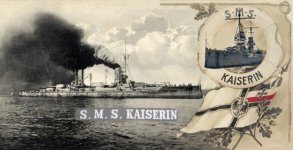
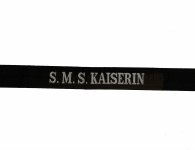

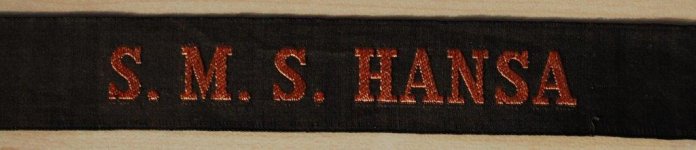
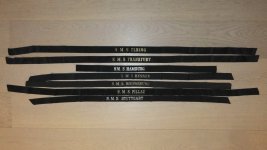
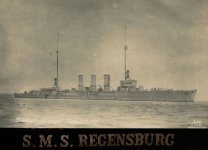
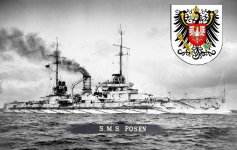
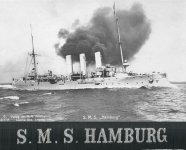
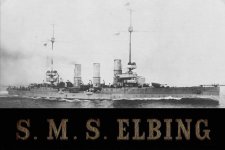
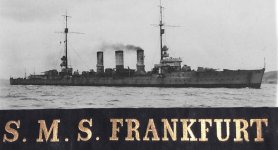
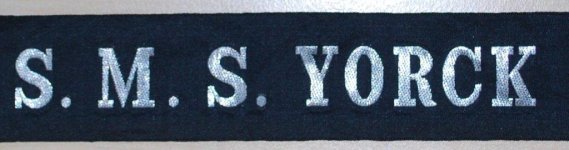
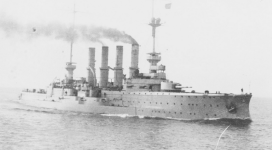
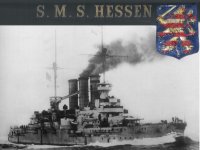

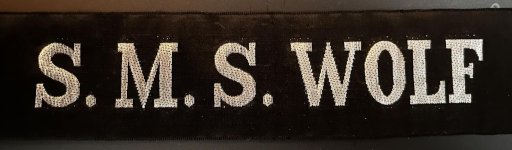
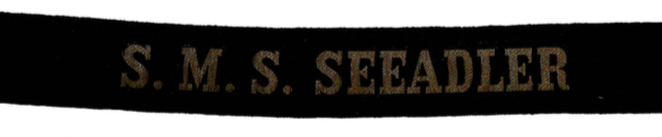
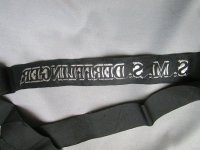
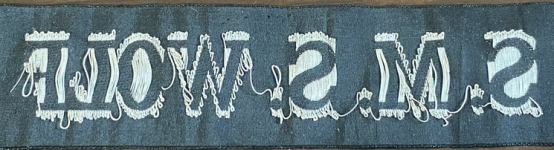
 I was able to complete all the named ships from the Battle of Jutland. I am working on completing the East Asia Squadron. I have also got several Surface Raiders. (Möwe, Seeadler, Wolf) Thanks all for checking out my posts. I look forward to seeing what others have too.

 .
.