Thank you for this excerpt, with which I agree.
Peacetime: consistency with A.K.O. standards is imperative, especially for new helmets used in parades, guard duty, and honor guards.
Wartime and mobilization: Ersatz, resourcefulness, repairs, recycling of reformed and decommissioned items, known in German as “Kriegsfertigung.” And there, everything was camouflaged by the helmet cover!
In fact, once again, we must distinguish between peacetime helmets, which conformed to the AKO M91, then M95, M99, etc.:
---Foot troops (Fuss-Artillery, Pioneers, Infantry, etc.): ventilation flap on the rear spine. This only applies to the troops, not to the officers, who are not supposed to "sweat" because they are travelling on horseback.
--Cavalry troops (Dragoons, Field Artillery, etc.): rear spine without ventilator, as described in the M91. (The only exception is the “Train,” a ventilated infantry helmet with a cavalry chin strap with curved scales!
However, from the mobilization onward, so-called "composite" designs were created due to the demands of urgency and shortages. This is how I came to have in my collection "ball" crests that could be screwed onto "Kammer" helmets of artillerymen from regiments without Haarbusch (a type of helmet). Conversely, there are regimental helmets in Haarbusch (particularly felt or metal helmets) that have fixed spikes.
In summary:
---M95--- Regulatory “KAMMER” (detailed review and frequent compliance inspection in peacetime)
---M14 (Ersatz for mobilization) in principle, in theory, also;;; but in practice...not necessarily. (ne controls, everything is hidden by the helmet cover).o mor




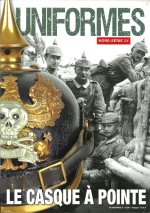


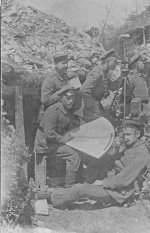
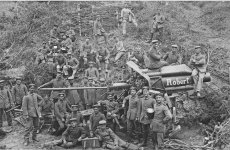

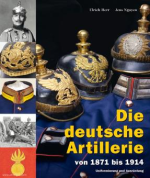

 ! These books of the Militaria-Verlag really are my favorites books about spiked helmets and uniforms. They are unique because of their detailed information, source references and the large amount of beautiful photos.

 !
!
