

Steve Nick
Well-known member
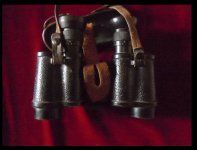
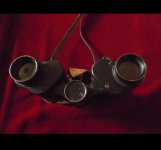
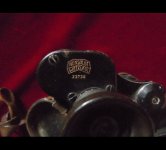
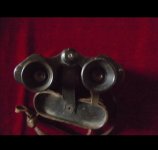
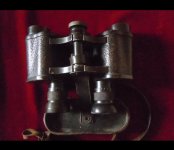
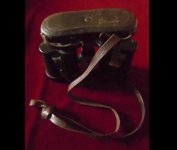
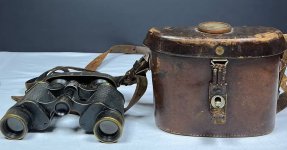
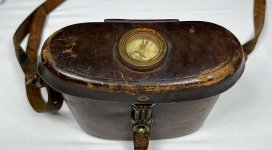
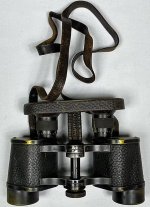
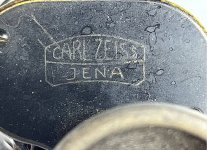
I just purchased this pair of Imperial Army binoculars made by Carl Zeiss at an estate sale in Ottawa.
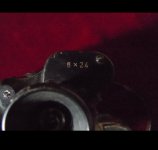
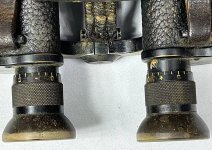
Based on the serial number and the materials used it’s most likely these were produced around mid-1915. This is a D.f. model in the very popular 6 X 30 version.
The optics are really surprisingly effective considering they are 111 years old. Good examples of binoculars of this quality in their original carrying case along with carrying straps and the “raincoat” (used to keep water out of the ocular lenses) with its spring tensioner are hard to find these days.
The left Objective lens features a range estimating reticle which I don’t now how to use at this point.
Its only flaw is the compass built into the case cover which features the ability to freeze the bearing has a hole in its glass lens.
I have had a pair of WW2 Binoculars made by E. Leitz/Wetzlar in 6 X30 for many years as they were given to my grandfather by a Canadian vet so I’m quite happy to have an Imperial pair by a maker on a par with Leitz as a companion piece.
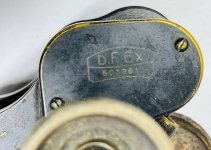
Based on the serial number and the materials used it’s most likely these were produced around mid-1915. This is a D.f. model in the very popular 6 X 30 version.
The optics are really surprisingly effective considering they are 111 years old. Good examples of binoculars of this quality in their original carrying case along with carrying straps and the “raincoat” (used to keep water out of the ocular lenses) with its spring tensioner are hard to find these days.
The left Objective lens features a range estimating reticle which I don’t now how to use at this point.
Its only flaw is the compass built into the case cover which features the ability to freeze the bearing has a hole in its glass lens.
I have had a pair of WW2 Binoculars made by E. Leitz/Wetzlar in 6 X30 for many years as they were given to my grandfather by a Canadian vet so I’m quite happy to have an Imperial pair by a maker on a par with Leitz as a companion piece.