From my knowledge most of them were private purchased and they were just brought from home so civilian ones. The majority of priests were self-dressers (selbst ankleider) so that means that they had to rely on their local Church communities to collect money for them to purchase uniform items EtcIt's good to have you with us.
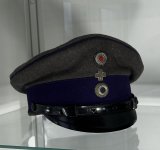
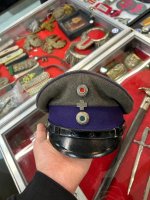
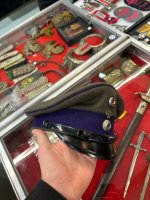
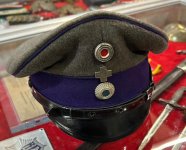
I think that cap is quite special, and this one is in very good condition. I also like that picture.
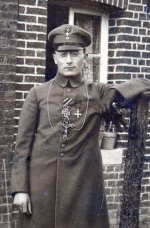
I recently bid on a crucifix that was advertised as an Imperial German Chaplin's, but I dropped out of the bidding as I had no way of knowing if it was really used in the field, and it went for more money than I was comfortable with. It was very similar to the one in your picture.
Is there any way of identifying a military used crucifix? Or were they all privately purchased by the individual priests?
Thanks for posting this.
Thanks for that information which confirms what I was thinking.From my knowledge most of them were private purchased and they were just brought from home so civilian ones. The majority of priests were self-dressers (selbst ankleider) so that means that they had to rely on their local Church communities to collect money for them to purchase uniform items Etc
If you mind me asking how much did the crucifix go for?


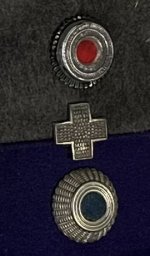
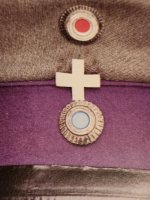
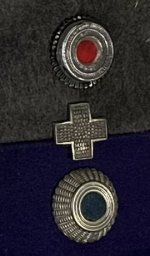
really nice pictures Like I said in my post there was quite some variation since field priest where selbst an Kleider that means the they were primited and had to buy there own uniforms There was some standardization in weapon color Like you said, but sadly I took the pictures in the evening with my phone and the color is quite muted I'll try to get some better pictures in the future For the centerpiece the cross that's in your case Is early war and is enamelled.Hello and welcome to the forum,
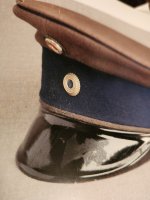
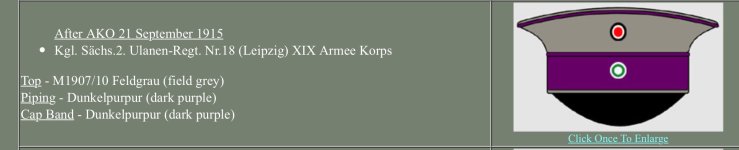
I'm certain Priest caps were Purple sadly yours looks blue which was used for transport also the cross used on the priest cap was made of silver with a white enamel cross.
I hate to be the bearer of the bad news so I'll just post a few pictures and I'm sure you will see the difference immediately.
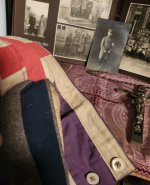
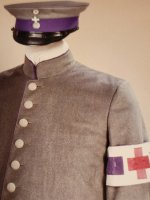
The first picture is from my collection to show the color difference used. Transport cap on left armband of a Priest which used the same purple color as the caps and tunic trim.
MFG and again welcome to the forum John Josef
100% Original Priest Armband and transport EM cap.
100 % Original Priest cap
View attachment 72980
Your cap original cap for transport troops with unknown cross added.
View attachment 72981
Same as yours as Bavarian Transport officers cap View attachment 72984
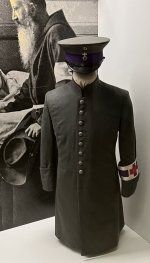
100% Original Priest Uniform showing very distinct purple color and armband.
View attachment 72982

really nice pictures Like I said in my post there was quite some variation since field priest where selbst an Kleider that means the they were primited and had to buy there own uniforms There was some standardization in weapon color Like you said, but sadly I took the pictures in the evening with my phone and the color is quite muted I'll try to get some better pictures in the future For the centerpiece the cross that's in your case Is early war and is enamelled.


Sadly, private purchase is the number one term used to explain away the inconvenient. Personally, I always get nervous when someone especially a dealer is offering something for sale that doesn't fit with known originals and photos from the time and labels it as private purchase.
I'm not so sure about the variation or the private purchase can you please tell me where you received this information. I'm always interested in learning from period documents or accounts.
The one in Ingolstadt is a beauty for sure and no matter how dark they keep it that Purple just stands out to my eyes and looks exactly as it should.
Also, can you tell me where you found the information on the white enameled cross being the early war version.
I know there were distinct differences in the cross types worn by Catholic and Protestant clergy, but I've never heard or read this information about early or late versions or saw photos of it.
Thanks in advance for the information. John Josef