

You are using an out of date browser. It may not display this or other websites correctly.
You should upgrade or use an alternative browser.
You should upgrade or use an alternative browser.
What sort of thread
- Thread starter Bobted
- Start date
Hi Rob,
For enlisted haubes, I use a heavy 0.55 mm linen thread that I purchase on eBay from a leather supply shop in Alexandria N.Y. I use black or light tan dependent on what was originally used. I have seen original helmets with a mix of black and (originally) white thread. For officer helmets, I use a lighter gage black linen. I used to use upholstery grade thread, but it has synthetic fibers for strength, so , I now use the more traditional linen. I always wax the thread a couple times with bees wax. It keeps the thread from twisting as badly, and makes pushing the needle through the holes easier. Prior to stitching, ream the stitch holes using a small burr the size of your needle in a Dremel tool, otherwise you will have a near impossible time making stitches. Sewing pattern is to make an S pattern from one end of visor to the other end, and then return stitch to the beginning end alternating the pattern thus completing a figure 8 pattern. This way, there are no skips of thread between holes. You will need good lighting. Look back at other restoration forum threads that Brian and I have posted on sewing technique.
Ron
For enlisted haubes, I use a heavy 0.55 mm linen thread that I purchase on eBay from a leather supply shop in Alexandria N.Y. I use black or light tan dependent on what was originally used. I have seen original helmets with a mix of black and (originally) white thread. For officer helmets, I use a lighter gage black linen. I used to use upholstery grade thread, but it has synthetic fibers for strength, so , I now use the more traditional linen. I always wax the thread a couple times with bees wax. It keeps the thread from twisting as badly, and makes pushing the needle through the holes easier. Prior to stitching, ream the stitch holes using a small burr the size of your needle in a Dremel tool, otherwise you will have a near impossible time making stitches. Sewing pattern is to make an S pattern from one end of visor to the other end, and then return stitch to the beginning end alternating the pattern thus completing a figure 8 pattern. This way, there are no skips of thread between holes. You will need good lighting. Look back at other restoration forum threads that Brian and I have posted on sewing technique.
Ron

Bobted
Well-known member
Thank you Ron
I thought I would have a go before sending it to Canada! as it is only stitching and nothing else and the holes are clear. I bought my Wig pins so I will get the thread off Ebay. Small burr like this or could I use a small drill? Rob
I thought I would have a go before sending it to Canada! as it is only stitching and nothing else and the holes are clear. I bought my Wig pins so I will get the thread off Ebay. Small burr like this or could I use a small drill? Rob
Attachments
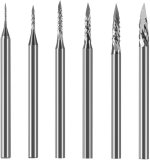
Use the smallest burr you can where the needle can just pass thru. I start the needle and thread through the holes, and then use needle nose pliers to pull the needle through. Saves on the hands tiring. It is best to count the holes in each piece to find the correct alignment. There should be an extra hole at each end on the body where the thread ties the visor end down. I use a modified large paper clip bent in a t shape and tie tack clamp lock nuts to hold things in place so I don’t stick my fingers with wig pins. You can also use masking tape to hold things in place so the visor doesn’t flop around when you first start. Take your time and it will turn out fine.
Ron
Ron
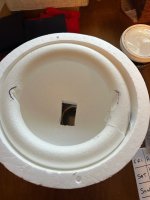
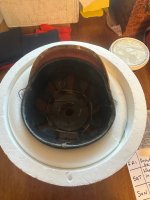
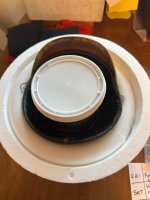
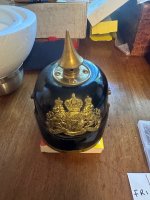
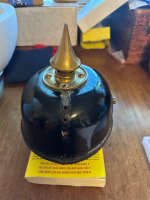
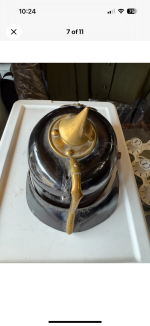
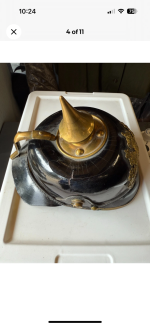
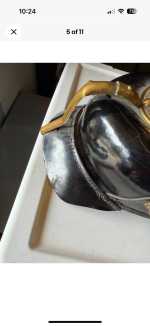
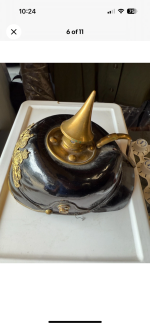
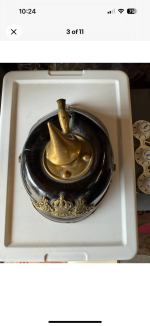
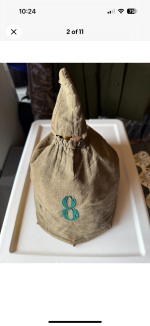
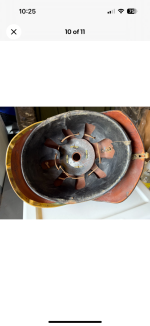

Good advice however, I do not use a dremel as I have found that too hard to control. Instead, I use a pin vice plus various bits of appropriate size to clean out the old thread. This means, that I am doing things by hand only. When cleaning out the holes in the side reinforcements, I use a thicker drill bit as we are stitching through 2 pieces of leather. I have posted photos of my tools, thread etc numerous times here. Similar to Ron, I use a finer thread on officer helmets and thicker on the OR government issued helmets. After years of doing this, I have sourced a type of vintage thread that was manufactured in the UK decades ago, 100% cotton. I have tried vintage linen but it broke continually, perhaps this was a bad spool?? Modern linen book binding thread comes in a natural white colour but can be dyed however, it is not thick enough...at least the stuff I bought for an OR helmet such as this. As Ron has stressed you must coat your thread in beeswax repeatedly as you stitch.  Your Bavarian looks great!
Your Bavarian looks great!
Last edited:

Pontiac9999
Well-known member
A pin vice is the best option for sure!