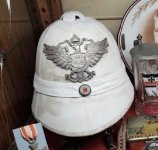
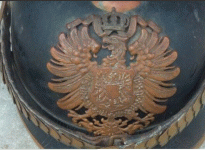
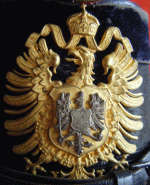
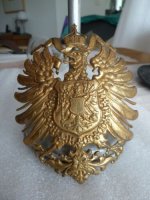
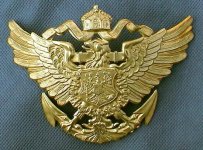
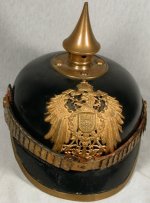
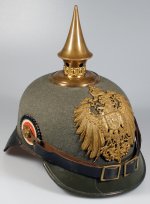
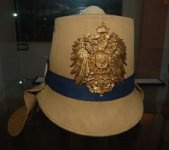
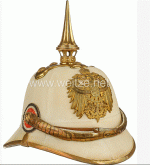
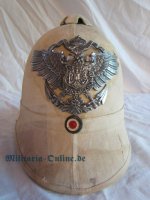
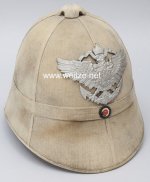
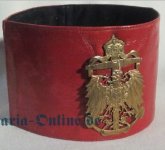
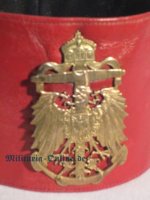
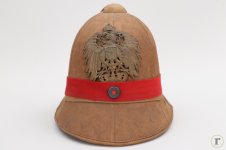
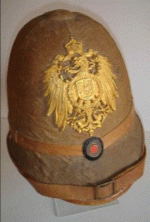
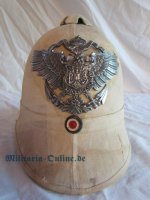
Just my take/bit: I don't trust AI and their evaluation or historical context. For the price that is being asked, I would expect Mr. Weitze and his crew to have fetched more concrete data from say the BundesArchiv for this piece. Claims that were made in the description: If there were only two veteranary officers stationed in Tsingtau in 1914, what were their names? Obviously, you were able to assertain that.(Supposidly). from where is the source(s) on that? I really am skeptical of the story as it is currently presented.
From the Weitze website:
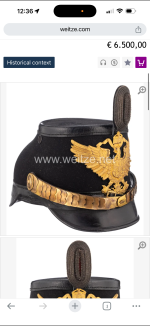
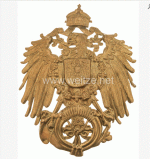
"Original pieces of such an eagle without anchor were previously unknown. The only known depiction of this eagle to us is found in a design for German colonial protection force uniforms, with personal annotations by Kaiser Wilhelm II. "
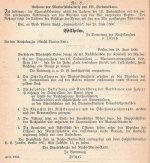
When were these created by the Kaiser? Were these officers already stationed in Tsingtau at the time of this regulation? These are just some of the questions I initially thought of. So, where is the M.O.bl or M.V.bl that states that Veteranarian officers stationed in overseas colonies (specifically China) were approved to wear this wappen? So, much to unpack here.....
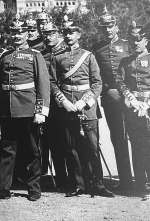
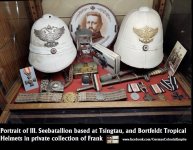
"This unusual variant can be explained by the specific uniform regulations for veterinary officers in the III. Seebataillon. According to regulations, these officers were to wear the “White Uniform” and “Tropical Uniform” in summer, like the officers of the naval field artillery battery. In winter, however, the army uniform with pickelhaube was prescribed, though with the Reich eagle rather than the Landwehr eagle. Officers of the naval field artillery battery, by contrast, wore the blue uniform of the naval battalion year-round with the shako and the special naval eagle."
So where is this? Too vague a response.
"It appears plausible that in practice, the veterinary officers oriented themselves toward the officers of the naval field artillery and also wore a shako instead of the pickelhaube. However, to clarify their special status as officers not originally belonging to the navy, the eagle was manufactured without the anchor. This solution was a compromise: the shako and naval eagle showed membership in the III. Seebataillon, while the absence of the anchor indicated the veterinary officers' army status."
At least AI has stated that this is a plausible theory, but again showing that it is speculation. This again, shows that the price is reflecting the plausible hypothesis and highest valuation of being true. But it could not be.....
Seems to me there might be some negotiation room if someone was to be interested in purchasing.
So, IMHO, The seller needs to produce this researched information. I personally never heard about this? This is being sold as a "Extremely Rare"... Obviously, with the hefty price tag. So, I believe that the seller needs to produce more concrete proof and not just the hearsay of any AI model. If the seller doesn't want or have the time to do this, I sure hope the perspective buyer takes the time to research and difinitively prove this "extremely rare" piece and accept that this piece and it's hefty Pricetag.
Ultimately, it is up to the buyer to either believe the story or to not believe the story and the price.
"Believe the item, not the story. " The best mantra to follow in the collecting world.
Thank you for reading my nonsensical babblings.
Best Regards,
JustinG
On a side note, I have had many very favorable dealings and speak very highly of Weitze and his staff. They are consumate professionals.



 www.weitze.com